ADHD Focus Strategies: Practical Techniques That Actually Work
If you have ADHD, you've probably heard all the standard productivity advice: "Just focus." "Make a to-do list." "Try harder." "Use a planner."
And you've probably noticed that advice doesn't work. Not because you're lazy or undisciplined — but because it wasn't designed for how your brain actually operates.
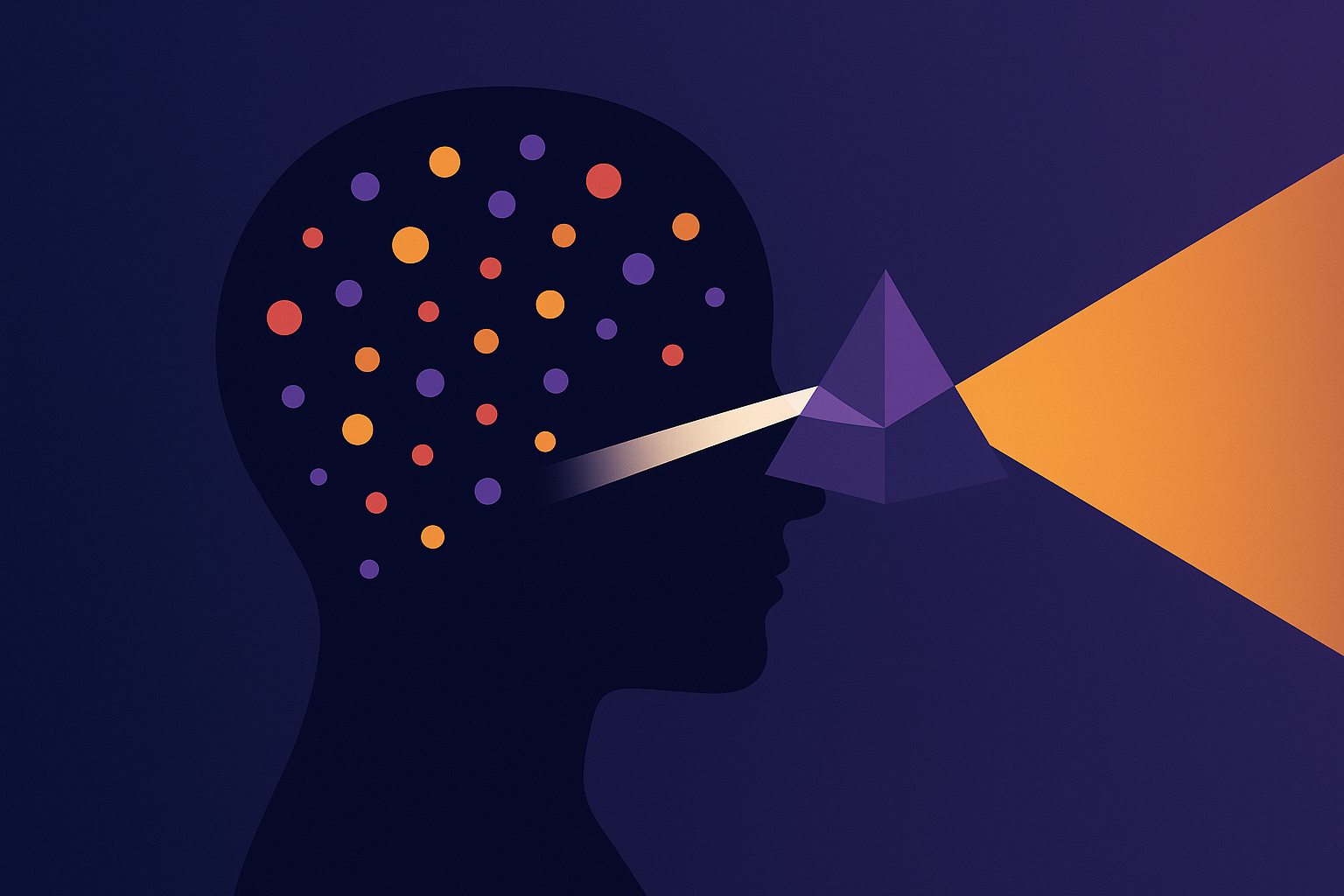
The ADHD brain isn't broken. It's different. It runs on interest, urgency, novelty, and challenge — not schedules and shoulds. Standard productivity systems are built for neurotypical executive function. When you try to force-fit them, you end up exhausted, frustrated, and convinced something is wrong with you.
This guide is different. These are strategies that work with ADHD neurology, not against it. No shame. No "try harder." Just practical techniques backed by research and refined by the ADHD community itself.
Understanding the ADHD Focus System
Before diving into strategies, let's understand what we're working with.
Dr. William Dodson, a psychiatrist specializing in ADHD, identifies four factors that activate the ADHD brain:
- Interest — genuinely curious or passionate about the task
- Challenge — the task is novel, stimulating, or competitive
- Urgency — immediate deadline or consequence
- Novelty — something new, different, or unexpected
Notice what's missing? "Importance" and "should." The neurotypical brain can activate for things that are important but boring. The ADHD brain often can't — not because of moral failure, but because of how dopamine and norepinephrine function differently in ADHD neurology.
"ADHD is not a knowledge disorder. It's a performance disorder. People with ADHD know what to do. They just can't do what they know." — Dr. Russell Barkley, ADHD researcher
The strategies below are designed to hack these activation systems — creating interest, urgency, novelty, and challenge artificially when the task itself doesn't provide them naturally.
Strategy 1: Body Doubling
Body doubling is working alongside another person — not collaborating, just existing in the same space while you both work on your own tasks. It's one of the most effective ADHD strategies, yet rarely mentioned in mainstream productivity advice.
Why It Works
The presence of another person creates gentle social accountability without the pressure of formal accountability. It also provides external regulation — your brain borrows some structure from the other person's focus.
Research on social facilitation (Zajonc, 1965) shows that the mere presence of others enhances performance on tasks we're capable of doing. For ADHD brains that struggle with self-activation, this external presence provides the missing ignition spark.
How to Implement
In-Person Body Doubling
Work at a coffee shop, library, or coworking space. Even a family member doing their own thing in the same room works. You don't need to interact — just coexist.
Virtual Body Doubling
Services like Focusmate pair you with a stranger on video for 50-minute work sessions. You state your goal, work silently, then check in at the end. The gentle structure is perfect for ADHD.
Passive Body Doubling
"Study with me" videos on YouTube, lofi girl streams, or simply having a calm podcast on in the background. Less effective than human presence, but better than isolation.
Body doubling works because it provides external structure without requiring internal motivation. Your brain doesn't need to generate the activation energy alone.
Strategy 2: External Structures (Not Internal Motivation)
The ADHD brain has weaker internal executive function — the mental "manager" that plans, organizes, and prioritizes. Trying to strengthen this through sheer effort is like trying to make yourself taller through willpower.
Instead, externalize your executive function. Move the structure outside your head.
Externalization Techniques
Time Timers and Visual Countdowns
ADHD brains struggle with "time blindness" — difficulty sensing how much time has passed. A visual timer (like the Time Timer with the shrinking red disk) makes time concrete and visible.
Written Task Lists (Physical)
Paper lists externalize working memory. Cross items off for dopamine hits. The key: keep the list visible. Hidden lists don't exist to the ADHD brain.
Commitment Devices
Tools that physically prevent you from self-sabotaging. Website blockers, phone lockboxes, app timers. Not because you lack willpower — because the ADHD brain needs external barriers, not internal ones.
Time Blocking (But Flexible)
Schedule your day in blocks, but use "theme blocks" rather than rigid appointments. "Creative work morning" instead of "Write report 9:00-9:47." ADHD brains rebel against micro-scheduling.
"You can't solve an external problem with an internal solution. ADHD is a problem of doing what you know, not knowing what to do. The solution must be external."
Strategy 3: Environment Design
James Clear's First Law from Atomic Habits: make good behaviors obvious and bad behaviors invisible. For ADHD, this is non-negotiable.
If distractions are visible and accessible, you will engage with them. Not because you're weak, but because the ADHD brain is stimulus-driven. Whatever's most immediately interesting wins. Design your environment so focus wins by default.
Physical Environment
- Clear your desk — only the current task's materials should be visible
- Face a wall — reduce visual stimuli when possible
- Phone out of sight — not silent, not face-down. In another room or a lockbox
- Noise control — noise-canceling headphones, white noise, or lo-fi music to block unpredictable sounds
Digital Environment
- Block distracting websites — system-level blocking (not browser extensions) works better because it can't be easily bypassed in the moment
- Notification lockdown — disable all non-essential notifications. Batch-check messages at scheduled times
- Separate browsers/profiles — one for work (blockers active), one for personal (relaxed). Never mix them
- Desktop clutter — close all apps except the one you're using. Empty the dock/taskbar
The goal is reducing the number of decisions your brain has to make. Every visible distraction is a micro-decision to resist. Eliminate the decision entirely.
Strategy 4: Interest-Based Activation
Remember: the ADHD brain activates for interest, not importance. If a task is boring, your brain will literally refuse to engage — not out of spite, but because dopamine regulation doesn't work the same way.
The solution: make boring tasks interesting. This isn't avoiding work — it's adapting work to your neurology.
Gamification
| Boring Version | Gamified Version |
|---|---|
| Clear 50 emails | How many can I clear in 15 minutes? Beat yesterday's record |
| Write report | 500-word sprint. Timer starts now. GO. |
| Clean apartment | One song = one task. Playlist shuffles the order |
| Study for exam | Turn concepts into flashcard game, teach an imaginary student |
Novelty Injection
- Change location — same task feels different in a new place
- Change tools — different pen, different app, different approach
- Change time — if afternoons are dead, experiment with early morning or late night
- Add music — instrumental only for focused work; lyrics compete for attention
Interest Linking
Pair an uninteresting task with something you do find engaging:
- Listen to a podcast only while doing dishes or exercising
- Work from a café you love — the environment becomes the reward
- Tackle admin tasks right before a meeting you're excited about (urgency + reward)
Strategy 5: Manufactured Urgency
The ADHD brain responds to urgency. That's why many people with ADHD are crisis workers — they thrive when deadlines are imminent, even if they couldn't start the same project weeks earlier.
The problem: real urgency often means stress and poor quality. The solution: create artificial urgency before real urgency arrives.
Deadline Hacking
Fake Early Deadlines
Put deadlines in your calendar 2-3 days before the real one. Some people even have a trusted friend or partner hold the real deadline — they only know the fake one.
Timed Sessions
"Work until 2 PM" feels infinite. "Work for 25 minutes" feels doable. Short deadlines create micro-urgency. Pomodoro technique works well for this.
Stakes
Use apps like Beeminder that charge you money if you don't meet goals. Or tell someone you'll donate to a cause you dislike if you don't finish. Real consequences activate the ADHD brain.
Public Commitment
Announce your goal on social media or to a friend. The social pressure creates urgency. "I'm going to finish this draft today" hits different when others know.
Strategy 6: Strategic Tool Use
Tools won't fix ADHD, but the right tools reduce friction. The wrong tools add cognitive load. Be selective.
Focus Tools That Work for ADHD
| Category | Tool Type | Why It Helps ADHD |
|---|---|---|
| Website Blocking | System-level blocker with Lock Mode | Can't be bypassed impulsively; removes the decision to resist |
| Time Awareness | Visual timer (Time Timer, etc.) | Compensates for time blindness; makes time concrete |
| Task Management | Simple list app or paper | Complex systems become another task to maintain; simplicity wins |
| Body Doubling | Focusmate, Flow Club, study streams | External accountability without social exhaustion |
| Noise | Noise-canceling headphones + instrumental music | Blocks unpredictable sounds that hijack attention |
🔒 Why Lock Mode Matters for ADHD
Standard website blockers let you disable them with a click. That's useless for ADHD — the impulsive decision to "just check Twitter" happens in milliseconds. By the time you've consciously decided, you've already clicked.
Tools with Lock Mode (like DeepZone) create a barrier that can't be bypassed until time expires. This removes the split-second decision entirely. The distraction isn't available to choose.
Strategy 7: Working With Energy, Not Against It
ADHD energy isn't consistent. You have peak hours and crash hours. Trying to force focus during crash hours is like swimming upstream.
Energy Mapping
Track your energy for a week. Note when you feel:
- High focus capacity — alert, engaged, flow possible
- Medium capacity — functional but requires effort
- Low capacity — foggy, distracted, resistant
Then match tasks to energy:
- High energy: Creative work, complex problem-solving, writing
- Medium energy: Meetings, communication, routine tasks
- Low energy: Admin, email, organizing — or better, take a break
Don't schedule your hardest task for your worst time slot. Protect your peak hours ruthlessly.
The ADHD "Tax"
Accept that some days, focus simply won't happen. This isn't failure — it's ADHD. Build buffers into deadlines. Plan for the 60% version of yourself, not the hyperfocused 150% version.
Strategy 8: Reduce Transition Friction
Starting is the hardest part. The ADHD brain struggles with task initiation — the mental shift from "not doing" to "doing." Once you're in flow, you can go for hours. Getting started is the bottleneck.
Lowering the Starting Barrier
The 2-Minute Start
"Just work for 2 minutes." The brain agrees to 2 minutes when it won't agree to 2 hours. Once started, momentum often carries you forward.
End Mid-Sentence
When you stop working, stop in the middle of something easy to continue. Tomorrow's you has a clear entry point instead of a blank page.
Prep the Night Before
Set up your workspace, open the right apps, put your tools out. Morning you shouldn't have to make decisions — just sit down and go.
Ritual Triggers
Same playlist. Same coffee. Same spot. Consistent rituals signal "focus time" to your brain. Over time, the ritual itself triggers focus mode.
Putting It Together: A Sample ADHD Focus Stack
Here's how these strategies combine into a practical system:
- Evening: Set up tomorrow's workspace. Write down the #1 task. Close all unnecessary apps.
- Morning: Don't check phone first. Coffee/ritual trigger. Sit at prepped workspace.
- Start: Activate website blocker with Lock Mode. Set visual timer for 45 minutes.
- During: Body doubling if helpful (Focusmate, lo-fi stream, café). Work on #1 task only.
- Break: Move physically. Don't check phone during breaks (keep blocker active).
- Repeat: 2-3 focus blocks during peak energy hours. Admin during low energy.
Adapt this to your rhythm. The principles matter more than the specific times.
Build Your External Structure
DeepZone's Lock Mode creates the external barrier your ADHD brain needs. No willpower drain. No impulsive bypassing. Just focus.
Try DeepZone Free →The Mindset Shift
Here's the uncomfortable truth: ADHD doesn't go away. You're not going to "fix" yourself into a neurotypical productivity machine.
But you can build systems that work with your brain instead of against it. You can externalize executive function, design environments that reduce friction, and leverage the strengths of ADHD — creativity, hyperfocus, crisis performance — while compensating for its challenges.
Stop asking "why can't I just focus like everyone else?" Start asking "what does my brain need to engage with this?"
The answer is usually: interest, urgency, novelty, challenge — or external structures that simulate them. Build those structures. Use the tools. Stop relying on willpower you don't have access to.
That's not cheating. That's adapting.
Further Reading
- Why Willpower Doesn't Work for Focus (And What Actually Does)
- Pomodoro Technique + DeepZone: The Ultimate Focus Stack
- DeepZone vs Focusmate: Social Accountability or System-Level Blocking?
- The Hidden Cost of Context Switching
- ADDitude Magazine — ADHD Resources
- Dr. Russell Barkley — ADHD Research
Research Sources
- Barkley, R. A. (2015). Attention-Deficit Hyperactivity Disorder: A Handbook for Diagnosis and Treatment.
- Dodson, W. (2020). "Secrets of the ADHD Brain." ADDitude Magazine.
- Zajonc, R. B. (1965). "Social Facilitation." Science, 149(3681), 269-274.
- Clear, J. (2018). Atomic Habits: An Easy & Proven Way to Build Good Habits.